Drawing set: reviews · Rev. 14
Blueprint-style cutaway drawing of a game console and controller with labelled internal sections
Sheet 01 · Front matter

We take games apart to see what is holding them up

Most reviews tell you whether a game is enjoyable. That is a fair question, but it is not the one we are equipped to answer for you. What we can do is open a game up, name its working parts, and report which of them carry the weight, which rub against each other, and which give way once you lean on them for forty hours.

The Cutaway is six people working out of a converted factory in the Ouseburn valley in Newcastle upon Tyne. Between us we have taken apart flight simulators, turn-based tactics, transit builders and stealth games. We publish roughly three teardowns a month, which is slower than most desks and deliberately so. A system cannot be assessed until it has been placed under load, and load takes time.

Blueprint drawing of a workshop wall panel with pinned notes and measuring tools

Fig. A — The amendment wall. Every published teardown keeps a card here until a patch closes it out.

6People on the bench
3Teardowns a month
41Median hours logged
4Test machines

Three headings, every time

Sheet 02 · Method summary
Applies to
Every published teardown without exception
Fixed since
Our fourth teardown, after two false starts
Full version
Procedure sheet

A teardown is not a stream of impressions in the order we happened to have them. It is the same three headings in the same order, so that a reader who has followed us for a year knows exactly where to look for the thing they care about. The headings sound dry written down. In practice they are the difference between a review that ages well and one that reads as a mood.

  1. Load-bearing systems. Which parts of the game are doing the real work? In a city builder it might be the road network rather than the economy. In a stealth game it is often the guard memory model, not the gadgets. We name the parts and describe what happens when you remove them.
  2. Friction points. Where do two working systems disagree with each other? A generous fast-travel network and a hunger meter both function on their own, and pull in opposite directions when placed in the same game. Friction is not the same as a flaw, and we try never to confuse the two.
  3. What breaks under stress. Anything holds up for four hours. We report the hour at which something gave way — a difficulty curve that flattens, a save system that cannot cope with a large settlement, a story that runs out of scenes before the map runs out of markers.

No number at the end. We tried a ten-point scale for our first three teardowns and abandoned it, because we kept arguing about the decimal instead of the game. Each teardown now closes with one of three marks: Sound structure, Holds with caveats, or Structurally unsound. The reasoning above the mark is the part worth reading.

Recent teardowns

Sheet 03 · Latest four

Four most recent, newest first. The complete set with genre filtering sits on the teardowns sheet.

Blueprint diagram of overlapping guard patrol cones across a floor plan

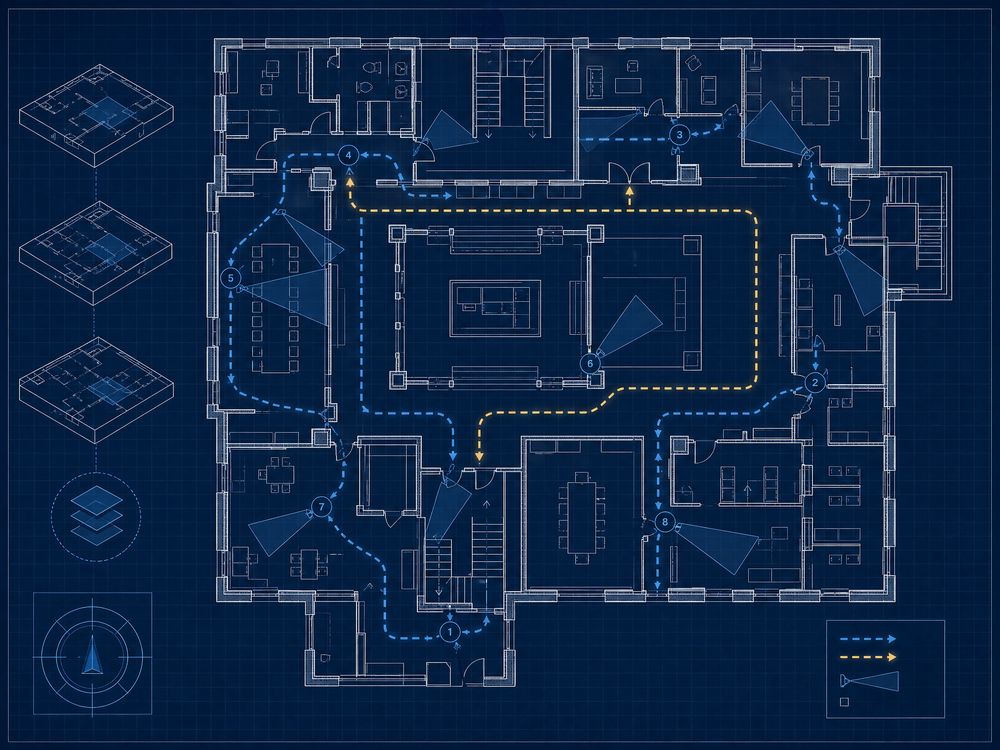
The guard who remembers: a stealth game built on one clever list

Stealth 52 hours logged Desktop, handheld

Almost everything interesting in this game comes from a single design choice: guards keep a short written memory of what they have seen, and that memory decays at a rate you can learn. Every gadget, every route and every failure state is downstream of that list. We spent a fortnight trying to break it and mostly failed, which is the highest compliment we know how to pay a system.

Sound structure
Core loop92
Endurance81
Access74
Stability88
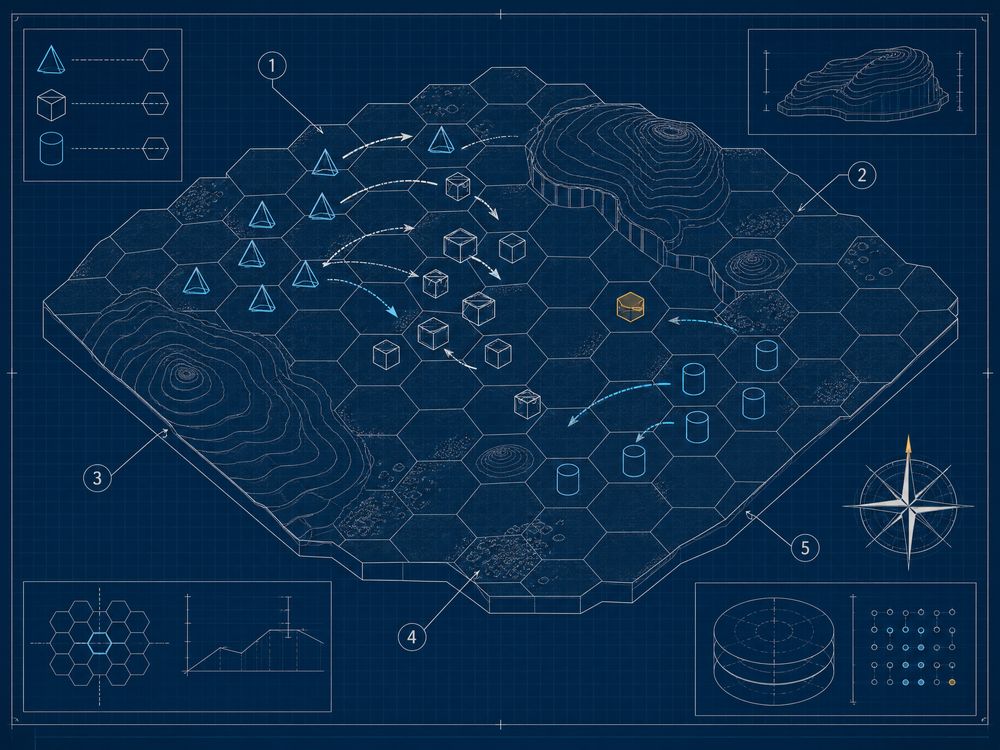
Blueprint diagram of a hexagonal tactics grid with unit range overlays

A tactics game that forgot to make the mid-game hard

Tactics 46 hours logged Desktop

The opening eight hours are as good as anything in the genre this year. Then the upgrade economy outruns the enemy design and the game spends its second half unable to threaten you. We can point at the exact mission where it happens, and at the two systems whose growth rates were never reconciled.

Holds with caveats
Core loop84
Endurance48
Access79
Stability86
Blueprint schematic of a transit network with junctions and platform detail

The transit builder whose save file cannot keep up with its own city

Simulation 61 hours logged Desktop, laptop

A genuinely fine network planner sitting on top of a save system that starts to buckle around the four-hundred-thousand-passenger mark. This is the clearest case we have covered of a game whose ceiling is set by a technical decision rather than a design one, and we log the exact point where autosaves began taking longer than the pause menu allows for.

Holds with caveats
Core loop89
Endurance57
Access66
Stability41
Blueprint cutaway drawing of a light aircraft cockpit instrument panel

A flight sim with a superb aircraft and a hostile front end

Simulation 38 hours logged Desktop

The aircraft model is the most carefully assembled thing we have handled this year. Getting to it requires navigating eleven menus, four of which cannot be operated without a mouse, and none of which explain the difference between the two engine start procedures. Excellent core, indefensible approach path.

Holds with caveats
Core loop94
Endurance83
Access29
Stability77

What falls outside our drawing set

Sheet 04 · Scope
Reviewed by us
Games that ship finished and stay finished
Not reviewed
Three categories, listed opposite
Requests
Dispatch sheet

A method that works on one kind of game will quietly fail on another, and a desk our size cannot pretend otherwise. Three categories sit outside what we can assess honestly, and we would rather say so on the front sheet than have you find out four paragraphs into a teardown that never arrives.

  • Live-service games that change weekly. Our whole approach rests on describing a fixed object. If the object is rebuilt every Tuesday, a teardown published in March describes something that no longer exists by May. Other writers handle this well. We do not.
  • Mobile free-to-play. Assessing these properly means assessing a payment structure, and that requires expertise none of the six of us has. We would be guessing, and a confident guess reads exactly like knowledge.
  • Annual sports releases. The interesting question with these is what changed since last year, which is a comparison job rather than a teardown. We have no useful baseline because we have never covered the series from the start.

Everything else is fair game, including small releases with no marketing behind them. Several of our longest teardowns cover games that sold in the low thousands, because an unusual system is worth describing regardless of how many people encountered it.

From the postbag

Sheet 05 · Correspondence

Your metro teardown was the first thing that explained why my city stopped being fun at a certain size. I had assumed I was building it wrong. Knowing it was the save routine and not me was oddly comforting.

Reader in Gateshead, on the transit builder teardown

I disagree with your flight sim mark and I want that on record. A hostile menu is a barrier for a week and then it is muscle memory. Weighting it that heavily flattens a genuinely excellent simulation.

Reader in Cardiff — published in full with our reply

We read everything that arrives and publish a selection each month, including the letters that tell us we are wrong. The flight sim disagreement above changed how we write the access section, though not the mark itself. If you think a teardown has missed something, the dispatch sheet is the place to say so, and the amendment log there records every correction we have made.